Your first hour in a village builder game
Read the first task before you build anything. Most village builders point you at the one building that gets the settlement moving, and following that hint saves wasted resources. Place what the task asks for, collect what it produces and only then look further.
Resist the urge to spend every resource the moment it arrives. A small reserve lets you start the next building without waiting. Take a minute to open each new building and read what it does, because that tells you what to build next.
Food and wood in village building games
In most village building games, food keeps the settlement working and wood pays for much of the early construction. That makes farms and a sawmill the usual opening. Stone and ore follow when the buildings you want need them.
Watch which resource runs out first. The one that hits zero while others pile up is your bottleneck, and the next building you place should usually help it.
This habit pays off in every village builder game. Check your stock at the start of each visit, decide what the settlement lacks and queue that first. A minute of looking saves an hour of waiting.
Why balanced production grows a village faster
Production is a chain of dependencies. If you have plenty of wood and almost no food, the wood sits idle. If you have food and stone but no wood, construction stops. A balanced village spends everything it makes, so each resource keeps turning into progress.
The practical rule is to compare your resources every time you return. Upgrade the weakest producer before the strongest one. It feels less exciting, yet the whole settlement speeds up because nothing waits for the slowest part.
Common mistakes in a village builder
The first mistake is building only what looks impressive. A showpiece building that needs three resources you do not produce just sits in the queue. The second is ignoring the upgrade queue: if a builder is idle, you are losing time. Always leave a long upgrade running when you stop playing.
The third is comparing yourself with other players too early. A village builder rewards steady choices, and a settlement that grows in order beats one that grows in a rush and then stalls.
The fourth is skipping the early tasks. In a good village builder game they are small lessons in disguise, each introducing a building or a rule you will need soon. Finish them in order and read the short text that comes with them.
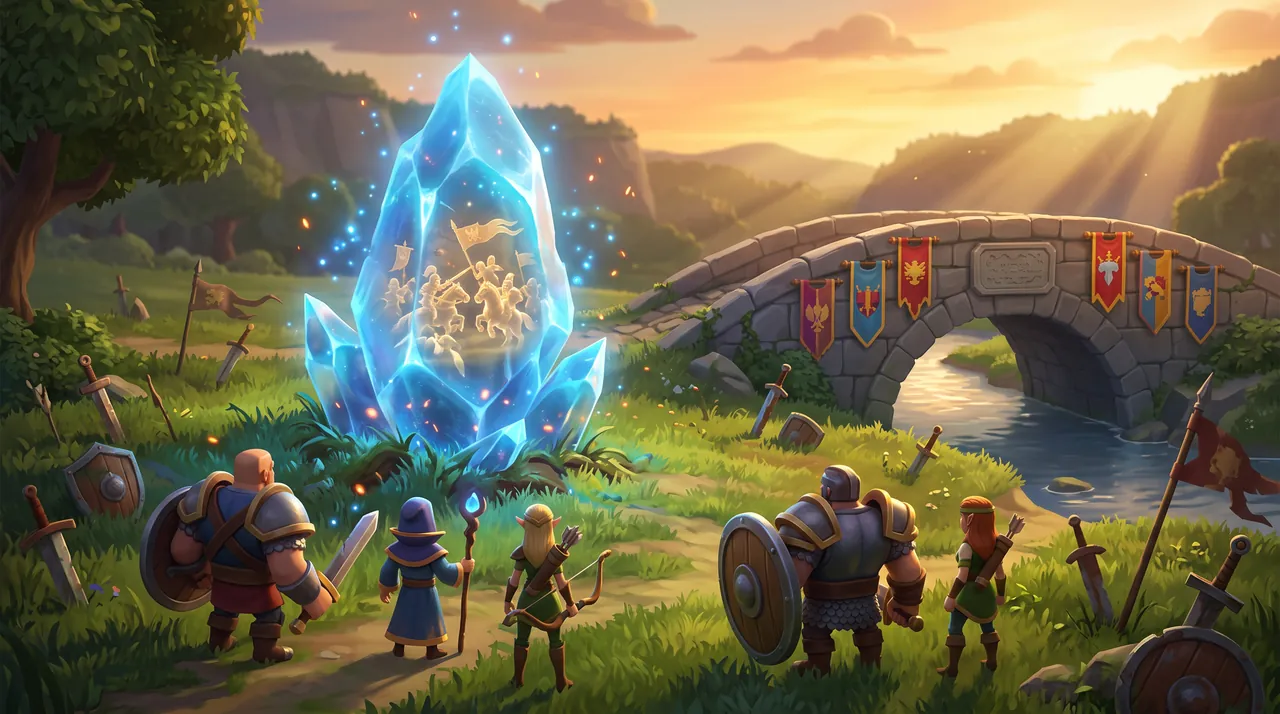
Crownforge: a forgotten settlement
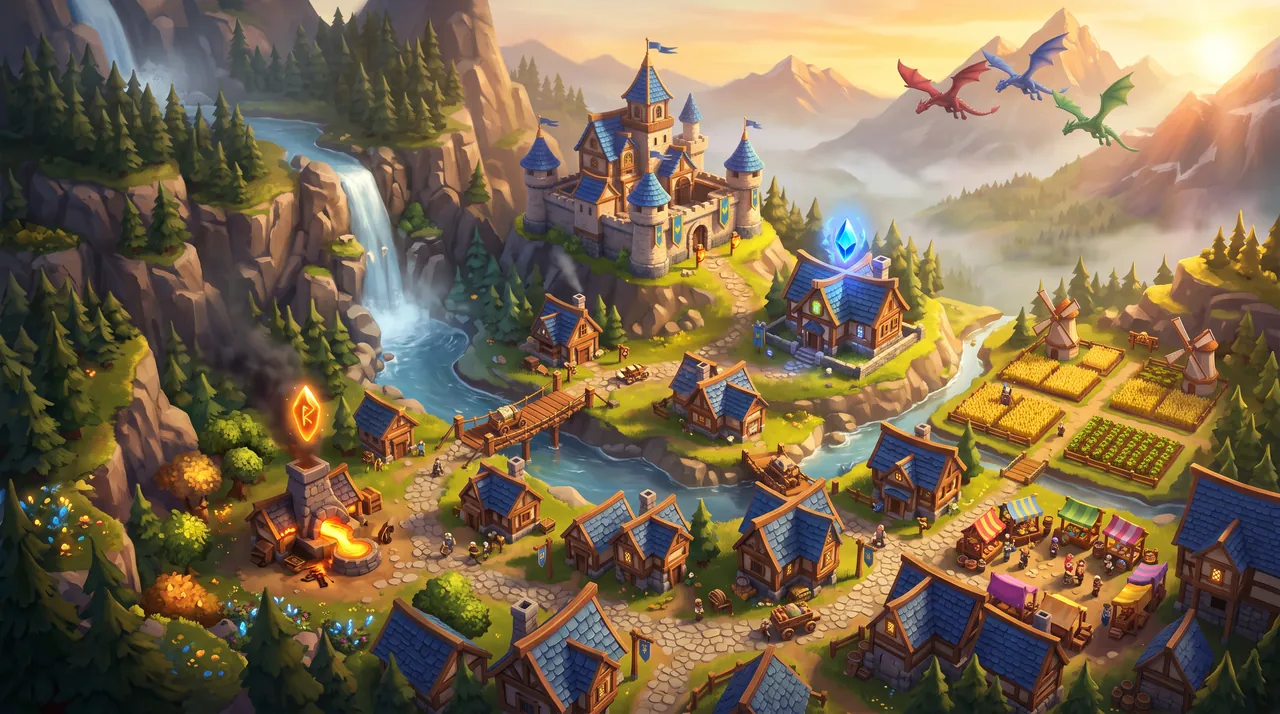
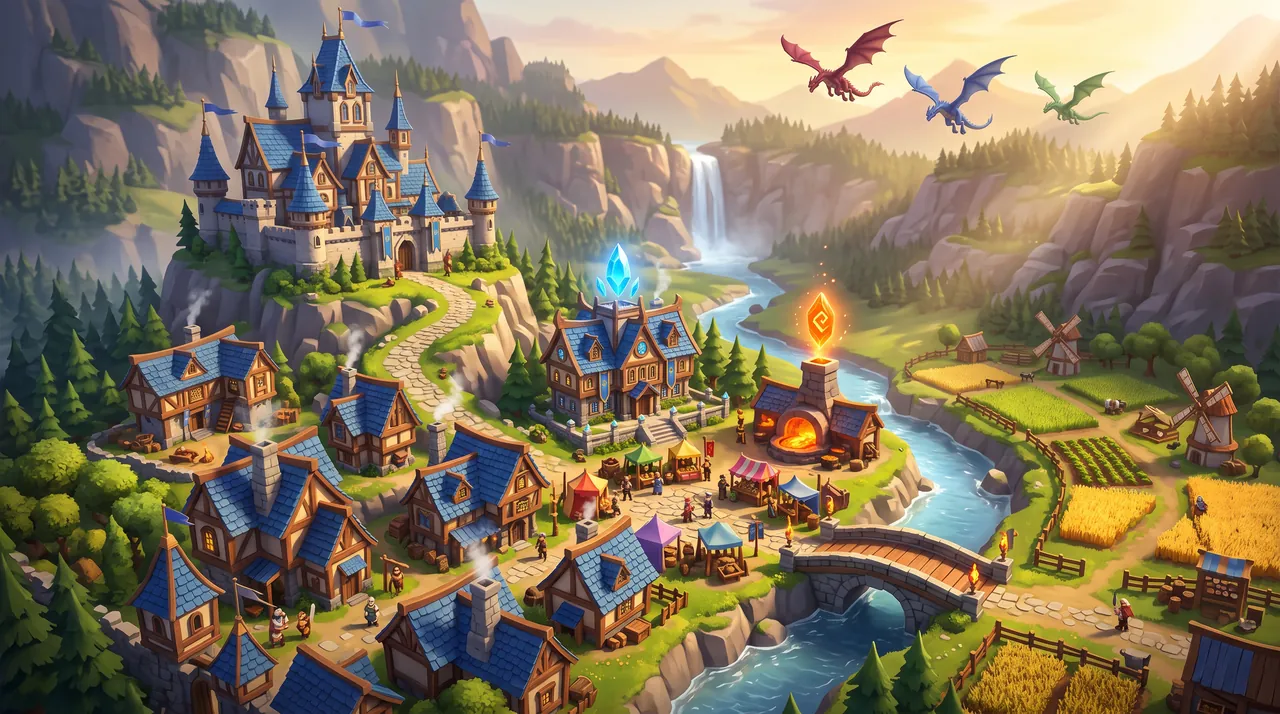
Crownforge opens with a forgotten settlement, and your first task is a farm. That is chapter 1, called "Bread before the sword". The city has the castle at the centre, with a farm, sawmill, quarry and mine. The forge, marketplace, Academy, Tavern and Mage Tower complete the city.
The castle and every building have 30 levels in six painted stages. Each stage brings an animated rebuild and opens new districts, so the settlement visibly changes on screen. Production keeps running for up to 12 hours while you are away.
Starting a village today
The browser version of Crownforge is playable today in open beta. You can start as a guest and secure progress with e-mail or Google later. Android pre-registration is open on Google Play, with launch planned for 1 December 2026. An internet connection is required.
Other players cannot attack or plunder your village, so the pace is yours to set.